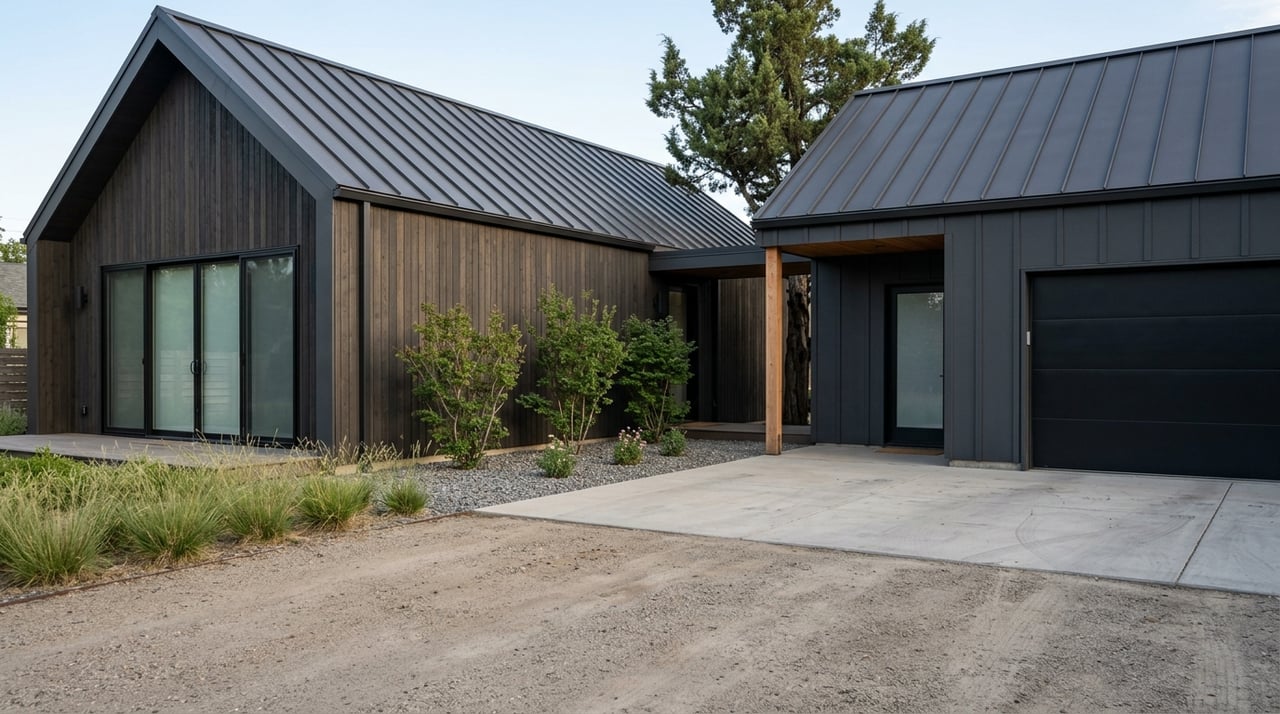
North of Erie Investment Property: Rentals and Land
May 7, 2026
May 7, 2026
If you have been eyeing land or rental property north of Erie, you already know this is not a market where you can make broad assumptions. A great-looking parcel can have very different rules, timelines, and costs depending on the exact address. The good news is that this corridor offers real opportunity if you understand how rental demand, jurisdiction, and land-use rules fit together. Let’s dive in.
North of Erie sits in a fast-growing corridor where local boundaries matter. The Town of Erie reported a 2024 population of 40,183, 14,903 households, and a median household income of $163,644, with population projected to reach 48,000 by 2030. Its planning area spans from Highway 52 to Highway 7 and from US 287 to I-25, which helps explain why the area continues to draw attention.
Weld County is growing too. Its 2025 demographic profile shows county growth of 36.85% from 2014 to 2024, along with a 2024 labor force of 177,959 and 47,725 residents in the unincorporated area. For you as an investor or land buyer, that combination points to a corridor with both population momentum and ongoing development pressure.
Before you underwrite rent, future value, or lot potential, you need to confirm who governs the parcel. North of Erie can fall under Erie town rules, Erie’s broader planning area, or unincorporated Weld County rules depending on the property location. That is not a minor detail. It shapes what can be built, how land can be divided, and how long approvals may take.
Weld County is clear that its zoning code applies only in unincorporated Weld County. That means parcel-by-parcel verification is essential before you assume a site can be split, improved, or repositioned. In this corridor, the address matters as much as the price.
From an investment perspective, one of the strongest arguments for this area is housing cost pressure. Census QuickFacts for Erie show an owner-occupied housing rate of 87.9%, a median owner-occupied home value of $685,900, a median gross rent of $2,775, and median monthly owner costs with a mortgage of $3,055. Those numbers suggest many households face a high barrier to homeownership, which can support ongoing rental demand.
Weld County’s 2025 Housing Needs Assessment adds more context. It found 21,904 multifamily rental units in 2024, including 3,865 units that were affordable, rent-restricted, or rent-subsidized. More than half of the rental units in that inventory were built between 2017 and 2024, yet renter-occupied housing still grew only 8.6% from 2013 to 2023 while owner-occupied housing grew 42.9%.
That imbalance matters. It suggests ownership housing expanded much faster than rental supply across the county. For you, that can mean well-located rentals may continue to benefit from limited supply, especially where buying remains expensive.
The county’s housing needs assessment shows 46% of renter households were cost-burdened. It also estimated that renter households needed about $69,160 in annual income to avoid being cost-burdened at a median-rent unit. When housing costs rise faster than wages, smaller units and rental alternatives tend to stay relevant.
Regional apartment data points in the same direction. Colliers reported Northern Colorado apartment vacancy at 5.4% in Q1 2025, with asking rent at $1,625 per unit and 1,196 units under construction. The report also noted that renters remain sensitive to high housing costs even as demand has rebounded.
For north-of-Erie investors, that means rental demand is not just about population growth. It is also tied to affordability constraints that can keep renters in the market longer.
Cap rates are useful, but only for income-producing property. They measure stabilized net operating income relative to price, so they work best for rentals that already generate income. For raw land, cap rate is usually the wrong tool because value depends more on entitlement potential, utility access, and comparable land sales.
There is no widely published cap-rate dataset for a north-of-Erie micro-market, so nearby benchmarks are the better guide. Matthews reported a 6.04% average cap rate for Northern Colorado multifamily in 2023. Colliers commentary on quality apartments suggested a benchmark of 5.05% to 5.55%, while a Greeley-focused brokerage page cited a 5.75% to 7.5% multifamily range and noted that Greeley often trades at a yield premium to stronger Front Range markets.
A reasonable takeaway is that stabilized rental assets in this part of the region may screen somewhere from the mid-5% range into the high-6% range, with smaller or value-add opportunities often underwriting higher. Still, this is only a starting point. Property condition, age, financing, rent assumptions, and deferred maintenance can all shift the number.
If you are looking at vacant land north of Erie, the biggest mistake is assuming a parcel can be easily split or improved. In unincorporated Weld County, the county recommends a pre-application meeting before beginning most development review. It also provides zoning and land-use maps to confirm what applies to a specific parcel.
Current Weld County guidance says the minimum lot size of unplatted land in the Agricultural zone is 35 acres. In some agricultural subdivisions such as Aristocrat Ranchettes, Arrowhead, and Indianhead, a minimum of 1 acre is required if the property has public water and septic. That distinction is a major reason many workable land plays are tied to existing subdivision patterns or already-serviced parcels.
The county does allow narrower smaller-lot pathways, but they are limited. A Minor Subdivision can allow up to nine buildable lots, must be outside one-quarter mile of a municipal boundary, and must be served by public water and adequate sewer. Weld County’s updated guidance also references rural land divisions of up to four lots with public water, along with resubdivision and family farm divisions.
Another important shift is Weld County’s removal of new Planned Unit Developments in 2024. The county said this change aligns with its comprehensive plan, which places urban-scale residential development in municipalities. For you, that means standard land-division paths now matter even more than they did before.
This change does not mean land deals are impossible. It means the easiest path is usually not large-scale speculative residential planning in unincorporated areas. Instead, the more realistic opportunities often involve smaller, clearly defined pathways with existing infrastructure support.
Even when zoning looks workable, infrastructure can quickly reshape your numbers. Weld County says land disturbance over one acre requires a grading permit. County-road connections may need access permits, and drainage review plus MS4 requirements can apply in relevant areas.
Water supply is another serious factor. The county’s housing needs assessment identifies water supply limitations in unincorporated Weld County as a significant barrier to development. If a parcel looks attractive on price alone but has uncertain water, sewer, or access conditions, the real cost may be much higher than it first appears.
The permit trend supports that cautious approach. Residential construction permits in unincorporated Weld County peaked at 318 in 2021 and fell to 73 in 2024. That suggests straightforward, by-right small-lot development is becoming harder, not easier.
In practical terms, the most realistic opportunities north of Erie are usually serviced infill, lot-line adjustments, existing subdivision lots, or parcels already positioned for water, sewer, and road access. These are the types of properties where fewer unknowns can lead to cleaner underwriting. You may still have upside, but with less entitlement risk.
Raw land can still make sense if you are comfortable with a longer timeline and more moving parts. In that case, you need to underwrite county process, utility coordination, drainage requirements, and subdivision pathway before you get excited about future value. In this corridor, patience and due diligence matter more than speculation.
If you are evaluating rental or land opportunities north of Erie, a simple screening process can save time and money:
That process may feel conservative, but it is often what separates workable deals from expensive surprises.
North of Erie is appealing because it sits at the intersection of growth, affordability pressure, and remaining land opportunity. At the same time, it is a market where the details can change from one parcel to the next. If you want to invest here, you need local insight that balances optimism with careful review.
That is especially true if you are comparing a rental acquisition against a land purchase. One may offer near-term income, while the other may depend on future approvals and utility feasibility. Both can work, but they require different strategies.
If you are exploring rental property, vacant land, or a build-ready parcel in Northern Colorado, The Sledge | Kolo Group offers a no-pressure, local approach to help you evaluate the opportunity with clarity.
Stay up to date on the latest real estate trends.

I believe in being a “no pressure” Real Estate Agent who will work within your time frame to achieve your real estate goals. I work hard to provide the best service possible for my clients so that they will consider me not only their friend but their Real Estate Agent for life.